Movement as a prescriptive pathway for emotional regulation in maladaptive environments

I didn’t go to university.
In fact. I didn’t even finish my A levels.
It’s rather poetic then, that the head of Durham University Department of Psychology invited me to present my Churchill Fellowship research, The Use of Exercise Prescriptively for Emotional Regulation in Maladaptive Environments, at their conference to drive systemic change for women and girls in the criminal justice system.
Here is what I had to say, for those of you who missed it:
~~~
I want to talk about women’s mental health in the context of the criminal justice system — but I want to approach it through the body.
Mental health does not exist separately from physical health, nor does mental health have immunity from our physiological state or environmental conditions. Our mental fitness is also coloured by lived experience.
Our brains live within our bodies; we are incarnate creatures. We therefore cannot deny the bidirectional pathway between body and brain. In isolation from the body, the brain simply becomes an amorphous blimp.
My perspective is shaped by three overlapping identities: I am a former ballet dancer, a clinical exercise physiologist, and someone who has spent time in prison. In 2022 I was imprisoned for four months, and during that time I became a walking, one-woman clinical experiment - using my body as agency, for emotional regulation and ultimately, saving my sanity in an environment that was seemingly designed to deliberately drive you insane.
Women in the criminal justice system are disproportionately affected by trauma, poverty, abuse, addiction, and instability. Yet when women enter prison, the response is rarely therapeutic. Instead, environments are rigid, punitive, and emotionally constrictive — often intensifying the very mental health challenges that could not be dealt with in the community and resulted in incarceration.
Women’s prisons differ from men’s prisons in the sense that they are ‘closed’ prisons – time allowed out of the cell is one hour per day. Only two women’s prisons in the UK are open – and they are rightfully reserved for women coming to the end of a long sentence, to prepare them for reintegration into society upon release. Therefore, most women you encounter in a UK prison will have been sausaged into a cell the size of the average sarcophagus for twenty-three hours per day for the duration of their sentence.
One of the most profound effects of incarceration is the assumption that the curtailment of freedom must also mean a loss of control. In prison, almost every aspect of life is externally governed – when you eat, when you bathe, when you can go outdoors, when you can speak to other humans, when you can access healthcare (if at all). But what struck me most was that this loss of control extends into the body.
Environment does not simply contain us. It starts to condition us.
I was locked in a cell for twenty-three hours a day. Very quickly, my body adapted to what it no longer needed.
The first thing I noticed was that I lost the reflexivity of my long-distance vision. When I looked down the wing at a whiteboard, I couldn’t make out what was written. My eyes simply would not adjust. If all you ever see is within two feet of your eyeballs, your body adjusts to those constraints. Most of what our brain interprets as reality comes through our vestibular and sensory input systems — what we see, hear, feel, and touch. What we see, is what our brain interprets to be true. When we can’t see, we can’t know. The brain is an information hungry device, and in the absence of vestibular input of information about the world around us, it will fill in the gaps itself. The brain creates a map of reality based on the information we stream into it constantly. In the absence of an accurate information stream, that map becomes an approximation of reality.
In a threatening environment, those approximations skew towards danger. Our subcortical brain, the amygdala – exquisitely evolved over many millenia to sense impending danger and trigger our fight / flight / freeze states – kicks in. Executive function – that is, rational thought, becomes physiologically impossible in this state.
I wrote this in a diary entry from my prison cell:
“When humans became bipedal, the working theory is that our sensory organs became less restricted to the area immediately surrounding us. It is a safe assumption, therefore, that our cerebral matter also benefited from greater freedom by seeing greater distances from a 360 degree perspective. The outcome of this is a brain that is capable of planning, imagining and problem solving.
I wonder if the inverse is true in prison? If you can’t see beyond forty feet of chicken wire, what is there to imagine?”
Prison became not just containment, but distortion.
Another fun product of prison time was that I found myself unable to climax. I will spare you the depth of detail of that nugget, but as a female who has been deeply embodied and connected to my intimate interiority through my whole life in physically presenting career choices, this was quite unique. This had never been an issue for me before, and it persisted for about six months after release.
What mattered was not the symptom itself, but what it revealed. It shows that incarceration produces almost immediate physical adaptations. Systems in the body down-regulate when they are no longer required. Vision, spatial awareness, movement variability — all begin to change.
The physiological dissociation I was experiencing meant that no psychological processing could truly occur. If the body is offline, rehabilitation is impossible.
How can rehabilitation succeed in environments that actively produce dissociation?
When I was released, I realised I had to rehabilitate myself deliberately.
Before I got back into a car, I began with walking.
I walked daily into large open spaces with distance and depth. I stood there and deliberately retrained my long-distance vision.
Only later did I return to driving.
I will spare you the detail of how I reconnected to my ability to orgasm post-incarceration.
This rehabilitative process began inside my cell. Inside a prison cell, movement becomes one of the only remaining forms of agency. I couldn’t choose where I went or when I went there. But I couldchoose how I used my body within that space. And that choice mattered.
I began to experiment with movement — not for fitness, not for performance — but as a way of regulating myself psychologically. I used my body in ways that resisted the environment: expanding where the space demanded contraction, slowing where everything else was imposed, rigid, and loud.
This is where movement becomes critical in custodial settings. Because when freedom is contained externally, agency does not have to be eliminated internally.
At this point, I wanted to explore whether what I had experienced intuitively could be observed more broadly. That became the intention behind my Churchill Fellowship, which I designed as an anthropological ethnography.
You may notice that much of my fellowship research focused on adolescents rather than women in prison. There was a very deliberate reason for that.
Aside from issues of access and timing, the women I was imprisoned with — and I suspect this is broadly representative — reminded me strongly of adolescents. Their low self-esteem, fragile sense of identity, emotional volatility, disinhibition, competing unmet needs and loudness all felt developmentally familiar.
At times, it felt less like being in a prison wing and more like being in a secondary school.
I also noted the sociogenic impact of containering many women in close proximity. This transmission of emotions across a cluster of people was proven in The Framingham Study — originally a physical health study in Massachusetts — later enabled researchers to examine emotional patterns within that community.
Happiness clustered. But depression was significantly more contagious.
When a woman became depressed, it increased the odds of depression in her close friends — both women and men — by up to 142%. When a man became depressed, there was no comparable measurable effect.
Emotion moves. In contained environments of women under stress, emotional states amplify.
I have a strong empirical belief that the neurodevelopmental profile of many incarcerated women — particularly in relation to emotional regulation and impulse control — is not dissimilar to that of adolescents, whose prefrontal cortex is still developing.
Observing adolescents therefore allowed me to study regulation, identity formation, and embodiment without replicating the carceral environment — and not least because I would consider maladaptive environments to include not only prisons, but also many classrooms, and, frankly, most hospitals.
When I was in Cape Town, I spent time with the School of Hard Knocks, an organisation providing touch rugby in commuter schools. These schools primarily serve adolescents from townships; young people from socioeconomically deprived backgrounds, living in poverty, and often facing extremely long commutes, usually over an hour each way just to get to school. Resources are low and mental health is poor.
SOHK offered rugby sessions within school hours - not as an adjunct or elective activity after school or as part of a club, but part of their school day. Attendance was mandated, but participation was not. Within about two weeks, however, all of the adolescents were participating fully.
The key to this success was not the sport itself, but the people leading it: every coach was also a trained therapist — either a psychologist or a mental health counsellor — equipped to spot red flags in adolescent behaviour.
From my anthropological ethnography on the sidelines, I observed something powerful. Children were sometimes pulled out of the game by a counsellor, and sometimes they volunteered themselves to step out for one-to-one sessions.
We’ve always squirrelled away the shame of therapy - taking it to the “counselling room” or a “safe space”, which also suggests the space that is safe, is separate to all the other spaces we exist in.
It is not. It is any space that we place ourselves in: safety is not a feeling, it is an unconscious state governed by our ventral vagal system. Safety is a situation your own body curates.
Each coach has their own lived experience story (which are theirs to tell - not mine); and so bring vastly different skills to the side of the pitch.
What was remarkable was that this happened in full view of their peers. The coaches and children together broke down the barrier of shame and secrecy that so often surrounds talking about mental health. Here, they were happening out in the open. Not audible, but visible.
That visibility — the sight of someone stepping aside to speak, to seek help — made emotional support tangible. It normalised help-seeking behaviour. It embedded empathy into the culture of play.
Slide 13
In Örebro, Sweden, I observed dance-for-health interventions for adolescents with psychosomatic pain. Extensive clinical investigations found no pathology. Clinical review revealed that these were manifestations of deeper mental health conditions such as depression and anxiety.
Dance has been shown to induce profound neurochemical and biological changes. It is one of the most effective forms of exercise for elevating mood and has been demonstrated to produce outcomes in reducing depression equal to — and sometimes exceeding — SSRIs and cognitive behavioural therapy.
One participant I worked with simply said: “I always want to feel like this in my body.”
And that really sums up what this research is about – coming back to what our body serves us for – it is not a vehicle merely to transport our cranium from one meeting to the next. It is the sole reason our brain is alive.
We are embodied.
Across every country, culture, and context I visited, I observed the same phenomenon: at some point, movement becomes external. It shifts from something we inhabit to something we perform. It becomes extrinsically motivated — driven by validation from peers, coaches, instructors, or audiences.
This work is about bringing movement back inside — to its intrinsic state.
Movement as embodiment.
Movement as life.
Movement IS life
Because without movement there is only stillness — and in stillness, is that not equal to death?
My motivation post-Fellowship is to bring movement:
1. Back to joy, and
2. Back to our environment.
Much of what I’ve witnessed — from prisons to classrooms to clinics — are maladaptive environments. In those spaces, the brain struggles to function, to feel, to survive. So how can the body support the brain within such environments?
If we return movement to where it belongs — as an embodied experience — we reconnect the brain with the body it lives in. We are embodied creatures. We are incarnate.
This means integrating movement not as a spectacle, nor a medicine, but as a micro-dose practice within everyday life: in classrooms, in communities, in corridors.
It is not about equipment or facilities — it is about education and awareness. Helping people understand that their body exists to be moved — not to perform, not to be perfected, not to be medicated, but to support the mind that lives within it.
Which brings me back to actual movement itself. Here are a few examples of placing an intention to a movement to engage the nervous system during its execution:
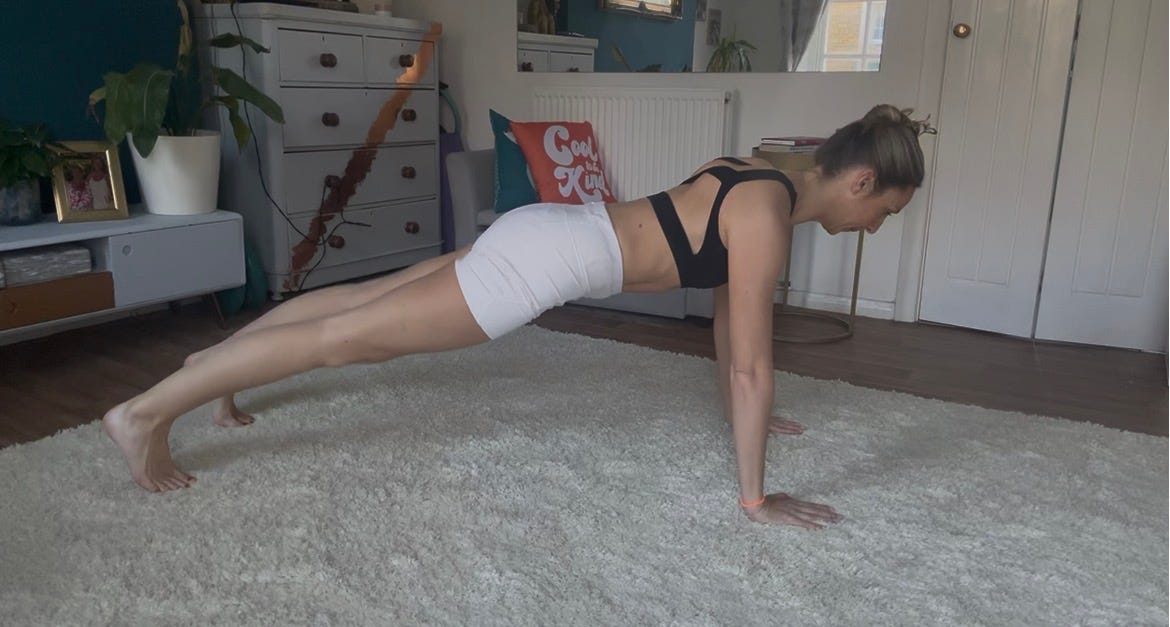
· A plank teaches control under pressure. It teaches me that I do not abandon what matters when I am under strain.
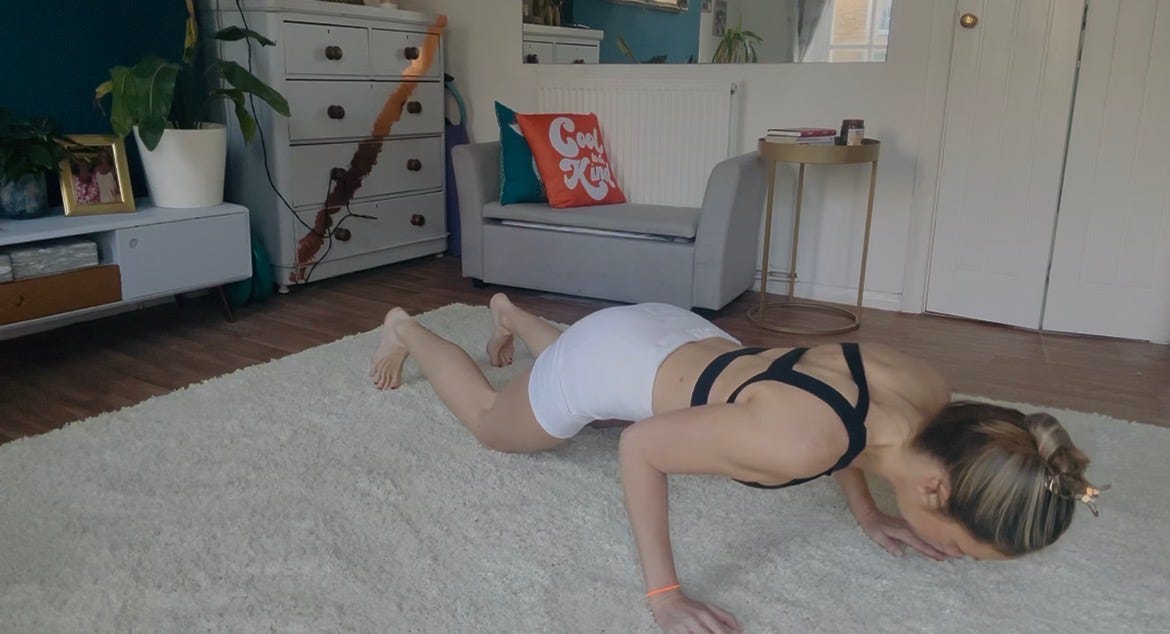
· Push-up-like movements build distress tolerance. They teach me that I can stay with discomfort.
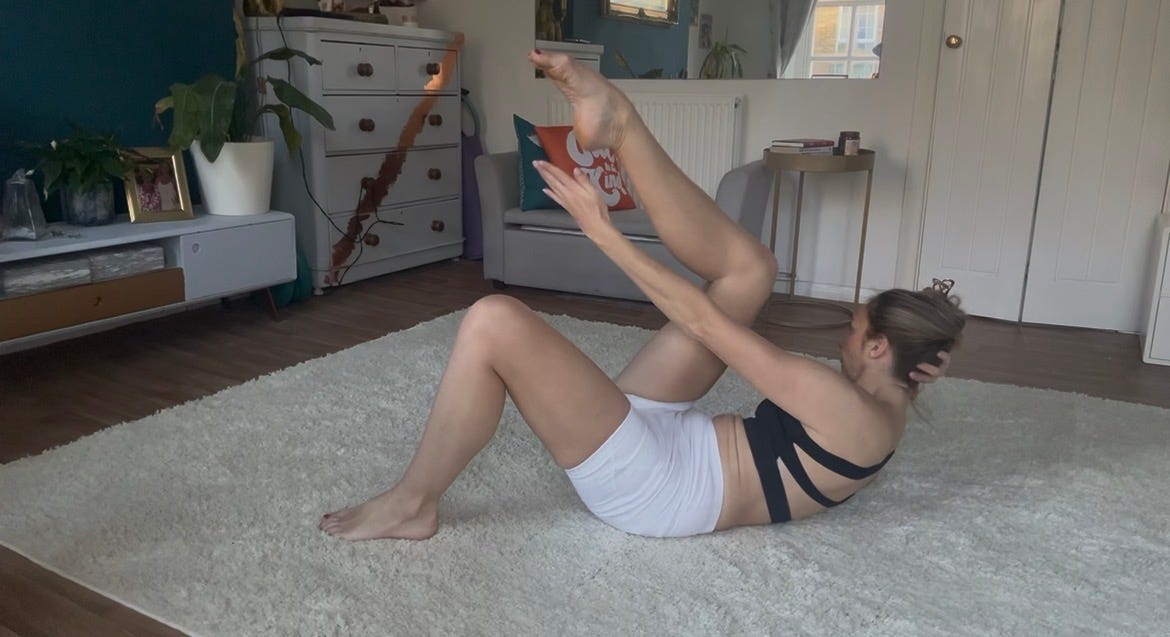
· Cross-body balance teaches stability through connection. A cross-body reach connects both sides of the brain.
· Bridge work teaches that support does not disappear when circumstances change. Grounding creates support.
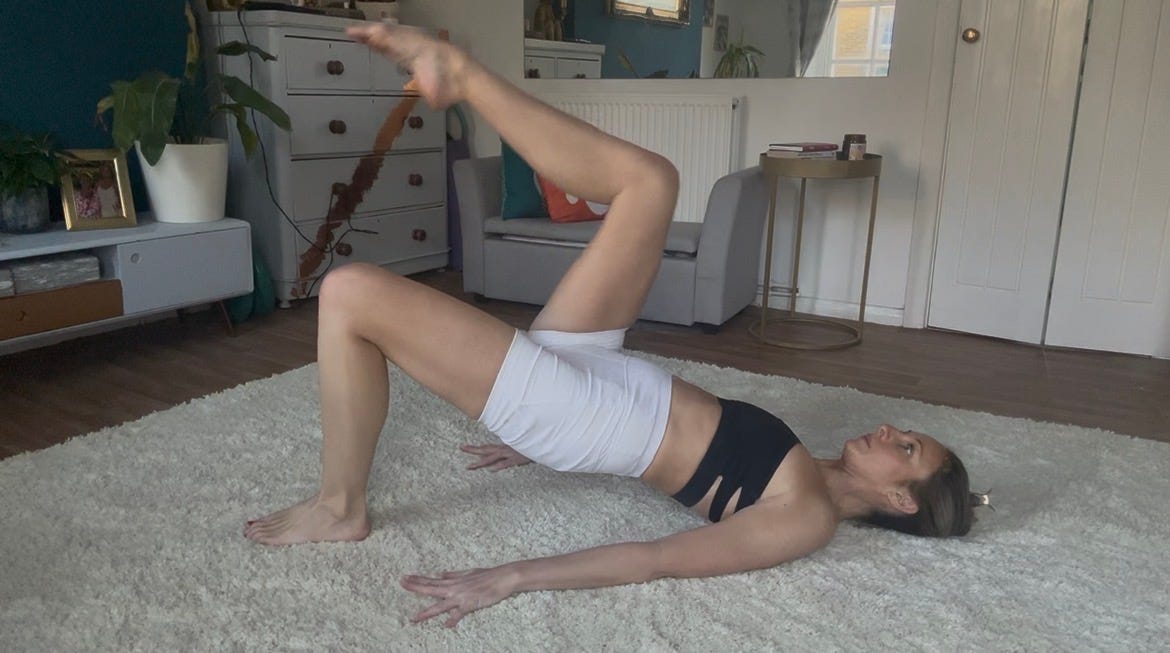
These are not exercises. They are nervous-system interventions.
If incarceration conditions the body, recovery must involve the body.
Movement is not a luxury. It is natural regulation.
Healing happens through movement, connection, agency, and safety.
And those are things we can build — even in the most constrained environments.
You’re even more impressive in long form
I cannot believe incarcerated women only get 1 hour our their cell a day - that’s fucking nuts-o. Surely that doesn’t involve bathing time, eating etc.? Is that just time to frolic? Why do men get to live in open prisons and women don’t.? Absolutely loved all the insight about movement, and couldn’t agree more!